Twelve Years…

of daily blogging. I started blogging twice a week in 2007, but on August 14, 2013 I switched to blogging every day. (This is my 5081st total post.)

Why? Because it makes me happy. What better reason? And blogging was there for me when I broke my hip last year and spent 45 days away from home. Hurray for iPads and blogging! An important part of my life came right along with me.

Posted in Life As a Shared Adventure | 32 Comments

Dogs and Books

Posted in Life As a Shared Adventure | 24 Comments

Virtual Voice

Because of my eyestrain I listen to a lot of audible books. I was surprised when I started my last one to hear the narrator say,

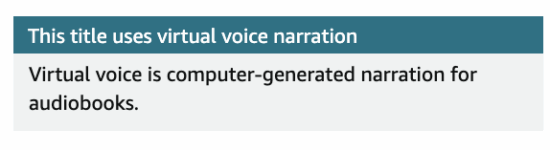
This title is narrated with Virtual Voice, computer-generated narration for audio books.

I noticed afterwards that Amazon had mentioned it:

I was concerned it might be distracting, but in fact the narration is pleasant and clear. It’s easier to listen to and understand than some of my other audio books. Good for them!

Posted in Life As a Shared Adventure | 32 Comments

Play Your Part Well…

and let go of the results. I was interested in philosophy when I was in high school, and I decided life was uncertain and that phrase was the only thing that made sense to me. It came from both the Hindu Bhagavad Gita and Marcus Aurelius, the Roman Stoic emperor.

It’s a fine sentiment, but not always easy to do. So I was chuffed last week when I spent hours and hours dealing with my mobile phone company (I will spare you the details) and managed to stay cheerful and patient through the whole process. Truth be told, I’ve been getting a lot of exercise patting myself on the back about it.

Then I was curious. What would ChatGPT and Perplexity say about the phrase?

ChatGPT:

That sounds like a wise reminder—one that echoes the teachings of many philosophical and spiritual traditions.

“Play your part well and let go of the results” means:

  • Focus on your effort, not the outcome.
    Do your best with what’s in your control—your actions, your integrity, your intention.
  • Release attachment to how things turn out.
    You can’t force the future, and obsessing over results creates anxiety and limits presence.
  • Trust the process.
    Like in Stoicism: “Do your duty; leave the rest to fate.”
    Like in the Bhagavad Gita: “You have the right to the work, not to the fruits of the work.”

Perplexity:

The phrase “play your part well and let go of the results” expresses a profound philosophical approach to life, work, and relationships. It carries several layers of meaning:

  1. Focus on Effort, Not Outcome
    It encourages you to devote yourself fully to the tasks at hand—to act with diligence, integrity, and care—without becoming attached to or anxious about the outcomes. Your responsibility lies in what you can control: your actions, intentions, and attitude.
  2. Acceptance and Surrender
    Once you have done your best, the results are often shaped by factors beyond your control. Letting go means accepting that uncertainties and external influences exist. This attitude helps reduce stress and disappointment, fostering peace of mind.
  3. Philosophical Roots
    This idea resonates with spiritual and philosophical teachings—such as the “karma yoga” of the Bhagavad Gita, which advises acting dutifully without attachment to the fruits of action. It’s echoed in Stoicism, which teaches focusing on what you can control and accepting what you cannot.
  4. Practical Application
    At work: Do your best on a project, then accept the feedback or the outcome, good or bad.
    In relationships: Be honest and present; you can’t control how others respond.
    Personal goals: Give your best effort, embrace growth, and let go of rigid expectations about results.

Benefits
Reduces anxiety and perfectionism.
Builds resilience and adaptability.
Encourages living in the present moment.

Summary: Play your part well—meaning act responsibly, with effort and integrity—and let go of the results, trusting that you’ve done your best and whatever comes next is for you to accept and learn from. It’s a formula for peace, personal growth, and a balanced life.

They both understood what the phrase means and the connection to the Bhagavad Gita and Stoicism. How cool is that?!

Posted in Life As a Shared Adventure | 20 Comments

Action Relieves Anxiety (Perplexity AI)

I gave Perplexity. the same prompt, and this is how it responded:

Taking specific actions such as regular exercise, deep breathing, mindfulness meditation, and structured problem-solving can effectively relieve anxiety.[1][2][3][4][5][6]
Key actions supported by research and expert guidelines include:

  • Deep breathing exercises: Techniques like diaphragmatic or “box” breathing can quickly reduce anxiety symptoms by activating the body’s relaxation response.[4][7][8][1]
  • Physical activity: Regular movement, such as walking, running, dancing, or yoga, decreases stress hormones and helps process anxious energy.[3][9][5][6][1]
  • Mindfulness and meditation: Practicing awareness and acceptance of the present moment through meditation has been shown to lower anxiety.[5][10][1][4]
  • Structured routines and self-care: Maintaining a predictable daily routine and engaging in self-care activities (adequate sleep, balanced meals, limiting screen time) provides emotional stability.[3][5]
  • Journaling: Writing thoughts and feelings can help to process anxiety and gain perspective.[1][3]
  • Challenging anxious thoughts: Learning to recognize and reframe irrational worries supports long-term anxiety relief.[9][4]
  • Social support: Talking about your feelings with friends, family, or a counselor can help reduce anxiety.[2]
  • Spending time with pets or in nature: Both are associated with lower levels of stress and improved mood.[3]
  • Professional support and therapy: Cognitive-behavioral therapy (including exposure therapy) and, in some cases, medication can provide long-term solutions for persistent anxiety.[9][1]

Even a small, intentional action—like a one-minute breathing exercise or taking a brief walk—can significantly diminish acute anxiety by restoring a sense of control and calming both mind and body.[7][11][4]

[1] https://www.mayoclinichealthsystem.org/hometown-health/speaking-of-health/tips-to-help-ease-anxiety
[2] https://www.nhs.uk/mental-health/feelings-symptoms-behaviours/feelings-and-symptoms/anxiety-fear-panic/
[3] https://www.mdanderson.org/cancerwise/anxiety-hacks–7-tools-to-manage-stress-and-worry-in-the-moment.h00-159537378.html
[4] https://www.healthline.com/nutrition/16-ways-relieve-stress-anxiety
[5] https://www.betterhealth.vic.gov.au/health/conditionsandtreatments/anxiety-treatment-options
[6] https://allonehealth.com/5-actions-to-alleviate-anxiety-quickly/
[7] https://www.youtube.com/watch?v=McCDfP5M878
[8] https://www.mayoclinichealthsystem.org/hometown-health/speaking-of-health/9-ways-to-tame-anxiety-during-the-covid-19-pandemic
[9] https://www.mind.org.uk/information-support/types-of-mental-health-problems/anxiety-and-panic-attacks/self-care/
[10] https://www.health.harvard.edu/mind-and-mood/recognizing-and-easing-the-physical-symptoms-of-anxiety
[11] https://www.dignityhealth.org/central-california/locations/stjosephs-stockton/about-us/hello-healthy/hello-healthy-articles/31-surprising-things-that-reduce-anxiety-fast
[12] https://www.ceelycounseling.com/action-cures-anxiety

Posted in Life As a Shared Adventure | 29 Comments

Action Relieves Anxiety (ChatGPT)

I gave ChatGPT that prompt and it said:

Yes — action relieves anxiety is a powerful and often true statement.

When you’re anxious, you’re usually stuck in your head — worrying about future possibilities, ruminating over past events, or overwhelmed by uncertainty. Action brings you into the present. It gives your mind something to focus on and your body something to do, which can break the cycle of anxious overthinking.

Here’s why action helps:

1. Shifts focus – Doing something concrete, even small, pulls attention away from anxious thoughts.
2. Restores a sense of control – Anxiety often comes from feeling helpless. Taking action gives you agency.
3. Builds momentum – One small step leads to another, which can reduce paralysis.
4. Engages the body – Physical movement can regulate stress hormones and calm the nervous system.

Examples of helpful actions:

  • Making a to-do list
  • Going for a walk
  • Cleaning a drawer
  • Calling a friend
  • Writing things down
  • Taking one small step on a project you’ve been avoiding

Important caveat:

Not all action is helpful — some actions are avoidance in disguise. The key is intentional, constructive action aligned with your values or goals.

Tomorrow I will post how Perplexity AI responded.

Posted in Life As a Shared Adventure | 20 Comments

Another Use of the Phrase

Sigh.

Posted in Life As a Shared Adventure | 22 Comments

There’s a Lot of Truth in That

Posted in Life As a Shared Adventure | 22 Comments

Graduation Gift

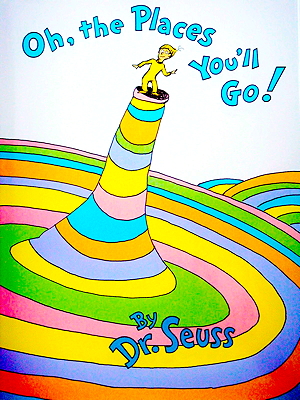
I graduated High School this week. When my dad said he had a present for me I thought I was getting some cheesy graduation card. But what I received was something truly priceless. Following the ceremony he handed me a bag with a copy of “Oh The Places You’ll Go” by Doctor Seuss inside. At first I just smiled and said that it meant a lot and that I loved that book. But then he told me, ‘No, open it up.’
On the first page I see a short paragraph written by none other than my kindergarten teacher. I start tearing up but I’m still confused. He tells me, ‘Every year, for the past 13 years, since the day you started kindergarten I’ve gotten every teacher, coach and principal to write a little something about you inside this book.’
“My early teachers mention my “pigtails and giggles” while my high school teachers mention my “wit and sharp thinking.” But they all mention my humor and love for life. It is astounding to receive something this moving, touching nostalgic and thoughtful.
Stories of kindness

What a thoughtful father!

Posted in Life As a Shared Adventure | 27 Comments

Why Has Nobody Ever Told Me This Before?

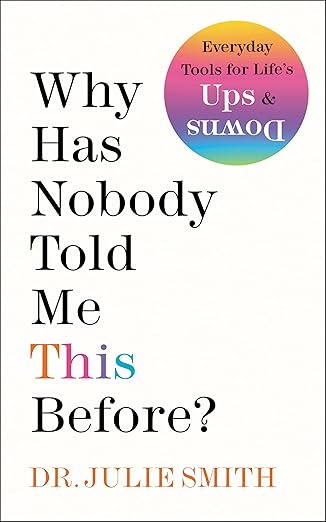
That’s the title of a book by Dr. Julie Smith.

I read it a while back and think it’s packed with great ideas. I’m dealing with something now so am reviewing what she suggests.

Here is Perplexity’s summary, with the footnotes taken out.:

Why Has Nobody Told Me This Before? by Dr. Julie Smith is a highly practical and accessible guide to maintaining and improving mental health. Drawing on a decade of experience as a clinical psychologist, Dr. Smith distills the key strategies and insights she typically shares with clients. The book tackles everyday challenges such as anxiety, depression, grief, motivation, stress, and self-doubt—providing actionable tools for coping and building resilience.

Key themes and takeaways from the book include:

Mental health maintenance: The book emphasizes that nurturing your mental health is as crucial as caring for your physical health. Dr. Smith encourages treating the mind like a muscle that benefits from daily care and attention.

Practical tools and exercises: Structured in modular sections, the book offers short chapters focused on topics like low mood, motivation, fear, grief, self-confidence, and criticism. Each section provides practical advice, such as journaling to challenge negative thoughts, using [breathing techniques] for anxiety, and making “good enough” decisions to break out of low-mood cycles.

Emotional awareness and needs: Dr. Smith teaches that emotions often signal unmet needs, and better emotional health starts with identifying and meeting those needs.

Accessibility: Written for a wide audience—students, parents, stressed professionals, and anyone seeking mental wellbeing—the book serves as a toolkit that democratizes access to psychological insights and self-care practices.

Evidence-based approach: The writing is concise and grounded in the latest psychological research, with examples, prompts, and exercises designed to encourage self-reflection and action rather than passive reading.

If you’re looking for an uplifting, actionable manual to help weather life’s emotional storms, develop resilience, or just better understand your mind, this book is widely recommended and described as “therapy 101”—filled with practical wisdom and tools for everyday life.

If you prefer videos, here is a good summary. There is a short advertisement in the middle.

Posted in Life As a Shared Adventure | 24 Comments